

In a collaboration with our partner OnRetrieval, we are organizing a webinar where we will showcase the main features of Binalyze AIR and how to achieve cyber resilience with its capabilities.
In a collaboration with our partner OnRetrieval, we are organizing a webinar where we will showcase the main features of Binalyze AIR and how to achieve cyber resilience with its capabilities.

Tallinn, ESTONIA – June 3, 2021 – Binalyze, the leading provider of advanced Digital Forensics and Incident Response (DFIR) solutions, today announced it has partnered with AHAD as a channel distribution partner for the GCC region (United Arab Emirates, Saudi Arabia, Qatar, Oman, Kuwait, and Bahrain).

Proven strategy to defend an organization from the risk of cyber attacks has for so long been proved to be prevention.
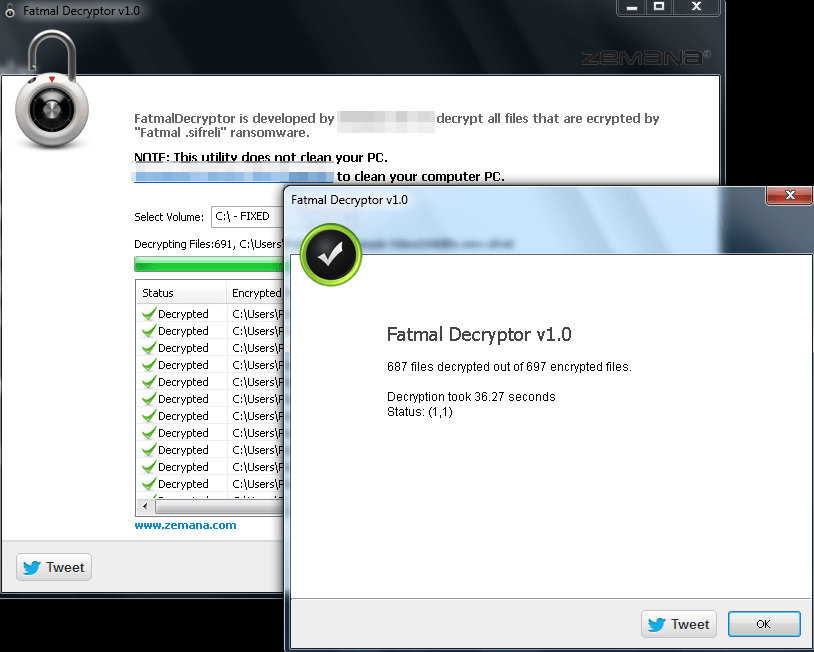
It was around 7 years ago when I analyzed my first CryptoLocker which was just a prototype full of mistakes and weird stuff. My first reaction to this ‘new’ way of making money was “Well, not an art piece compared to what we have been dealing for the last three years (mostly low-level kernel-mode rootkits) but it is still promising”.
Back in the day, a quick look into the code was more than enough to create a decrypter. But how? The problem was that the attacker was using AES 256 in CTR mode and he was only encrypting the first 2MBs of the files for making the encryption process faster. Finding that all the affected systems had a video file named “Wild Life” which was also encrypted by the CryptoLocker, we have created a decryptor for FREE (zero bitcoins). This was –as far as I know– the first freely available decrypter for a crypto-locker case. The funny thing is, the author of crypto locker fixed his cheap code by switching to AES CBC mode after finding out that the victims were using our tool to decrypt encrypted files, not his :):):)
7 years fast forward: Our partner CyberArtsPro calls our support team on a Sunday morning in an urgency stating that IREC TACTICAL can not collect evidence from a crypto-locker infected machine?! We were surprised at first but a quick investigation made it obvious that the crypto locker was not only encrypting the user files but also the evidence collected by IREC.
The moment I was informed about the situation, my reaction was “All right. Let the war started.” which led to the development of our new feature “SHIELD”.
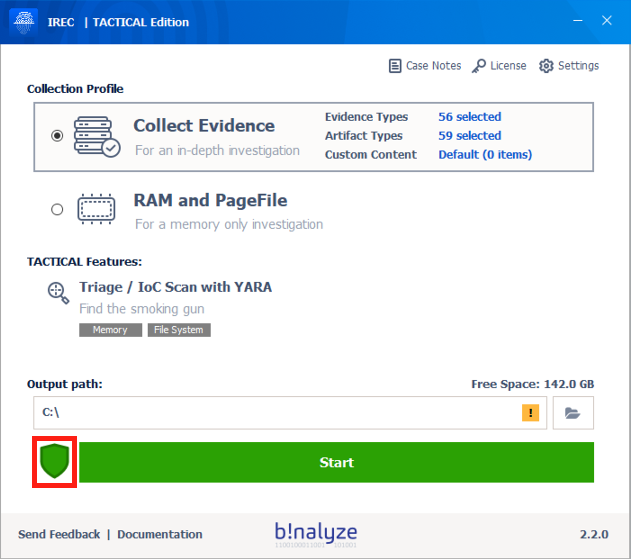
SHIELD is a kernel-mode component added to IREC version 2.2.0 protecting all the evidence collected by our solution regardless of the media it resides in. At its core, it is a Mini Filter driver attaching to all volumes on the affected machine for blocking access of any other application except IREC thus enabling our users to securely collect evidence.
At this point, you may be asking what is the point of collecting evidence from an already infected machine. Aren’t crypto locker authors using asymmetric encryption for their ransomware? They mostly do but not always. Remember that most cybercriminals are in chase of easy money which makes them susceptible to making a lot of mistakes. As an example, in a recent case, our partner DIFOSE was able to retrieve the decryption key of VEAM Backups just by using IREC’s Clipboard content collection feature. (Note to attackers: DO NOT copy & paste encryption keys please type them patiently if you want your Bitcoins.)
Starting with version 2.2.0, SHIELD will be enabled by default and will stay active until you disable it by clicking the shield icon on the main page of IREC or by clicking one of the two buttons on the acquisition summary page (Open Output Folder / Open Case Html). Please note that IREC will only protect the case files it collects regardless of the location they reside (USB Drive or a network share) which is the reason we suggest you use a USB drive or a network share dedicated for this purpose only.
You can download IREC 2.2 Preview version from the link below: https://cdn.binalyze.ai/irec/IREC-2.2.0(Preview).exe
Enjoy SHIELD and stay safe at home!
Dear Attacker;
Please accept our apologies for decrypting your so-called ultra-secure encrypted files.

Covid-19 pandemic has become the most important topic in cyber security as in many other areas. The pandemic has affected people’s lives and caused significant changes in working procedures of organizations. Many organizations including public institutions activated remote working procedures hastily. In fact, the transition has emerged as an imperative to protect employees and to prevent the spread of the pandemic. So it is still unknown whether they are well prepared for the situation, even if they are practicing the work-from-home right now.
The image that has emerged so far do not give any idea of organizations’ preparation level, but it has clearly showed that there are many cyber attackers who try to exploit the situation caused by the pandemic. The increase in cyber incidents related to Zoom application (daily traffic to its download page increased 535 percent in the last month) which used by many organizations and work-from-home employees is one of the most obvious indicators. Another significant indicator is 32X increase in the number of successful daily phishing attacks. It is obvious that cyber criminals are adapting their techniques to new working environment.
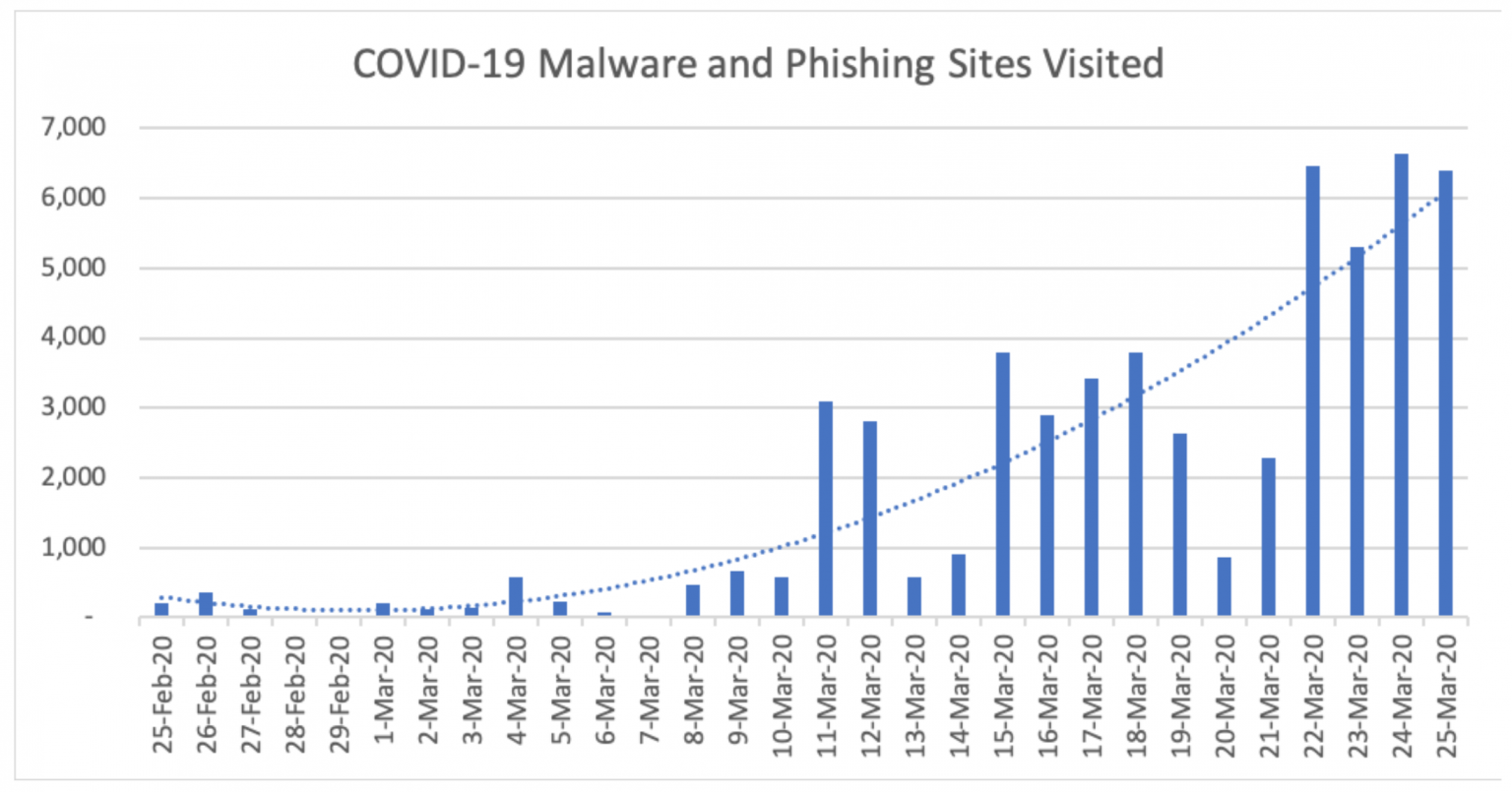
The organizations will face a serious examination because the increasing number of cyber incidents. The employees sitting in front the computer in the office before the pandemic had the capability to check the whole system physically in order to secure the network and the sensitive information of the organization are now at home and trying to do the same job. At this point, while it is now more difficult to supervise the employees working from home, on the other hand, more time may be needed to detect and respond to a possible cyber incident. Traditional methods, based on physical connection, used by the organizations can be insufficient to respond to incidents. So the organizations need a new perspective. Simple and fast applicable automated procedures and practices will make it easier to respond to incidents and minimize the damage by shortening the reaction time.
Covid-19 pandemic does not seem to end in the short term. So the increase in remote working related to the pandemic will not end soon as well. It is estimated that remote working emerged with the pandemic as a mandatory practice will increase 5-6 times in next two years. It will be better to be ready for this new working environment to be permanent after the pandemic.
Developing a new perspective: Developing a new perspective independent from traditional working pattern will be very helpful to solve the problems which are caused by remote working. When security and IT infrastructure of the organization is reviewed in terms of this perspective, it will be easier to find solutions to possible cyber incidents and determine necessary hardware, software and the need of qualified IT personnel.
Training of the employees: Most of the cyber incidents are based on users. Therefore training is of the employees will minimize the risk of a possible incident. Otherwise, even if all necessary measures are taken, the cyber incident is inevitable.
Preparing an Incident Response Plan: It vital to have a path to follow when a cyber incident occurs. Because in case of an incident knowing what to do step-by-step will help everyone (employees, IT personnel, experts, managers) and protect the organization from possible simple mistakes and waste of time. Developing an Incident Response Plan, will help organizations get out of the crisis where the time is so valuable and prepare them for future cyber threats.
Using VPN: Remote working (probably from a public network) inevitably will cause a need of remote access to organizations critical data. Creating an encrypted and secure tunnel to access the servers of the organization will reduce the risk of a cyber incident. You can make use of the VPN opportunities offered by operating systems as well as the commercial VPN providers.
Continuous IT Auditing: It is now more difficult to audit the computers and the network of organizations systematically and to keep the system under control with hasty transition to remote working. This process made the organizations more vulnerable to cyber-attacks. Creating an auditing system for the employees away from IT personnel of the organizations, without a secure internet connection, connecting organizations’ servers from various locations is a mandatory issue to prevent cyber incidents and minimize the response time.

The first step in achieving forensic readiness is to do a complete risk-assessment analysis of all your business operations. The main goal is to identify any potential risk and vulnerabilities in your business processes so you can understand and define where digital evidence may be required and may benefit the organization.
Finalizing the first two steps of the forensic readiness plan brings you to a position where it is possible to decide which types and sources of evidence collection (Step 2) can help you in dealing with business risk situations (Step 1).


Ransomware is not new but it continues to be one of the biggest challenges for every kind of organization in recent years. There were a total of 308 million ransomware attacks in 2020. This means a 62 percent increase from 2019. At the same time, ransom payments are also increasing. In the first quarter of 2021, the average of ransom payments was over $220,000.

Binalyze AIR v1.8.0 RC is now available.