
Category: In the Press

Binalyze Announces Strategic Technical Services Partnership with DIFOSE to Strengthen Capabilities in Türkiye

Binalyze Announces Strategic Technical Services Partnership with DIFOSE to Strengthen Capabilities in Türkiye

London, UK– May 18th, 2026 —Binalyze, a provider of automated investigation and response solutions , today announced a strategic partnership with DIFOSE, a Türkiye-based cybersecurity and technical services provider. This collaboration marks an important step in expanding Binalyze’s regional capabilities and enhancing customer support and service delivery across Türkiye.

Under the agreement, DIFOSE will act as Binalyze’s Technical Services Partner in the region, delivering a range of specialized services aligned with Binalyze’s operational standards and methodologies. These services include technical support, product deployment and maintenance, training, and incident response consulting for customers operating in Türkiye.

This partnership is designed to bring customers closer to expert support and hands-on technical capabilities, ensuring faster response times, improved implementation experiences, and deeper engagement with Binalyze’s solutions. By combining Binalyze’s advanced technology platform with DIFOSE’s local expertise and on-the-ground presence, the collaboration aims to deliver a seamless and high-quality customer experience.

As part of the relationship, DIFOSE’s technical personnel will work closely with Binalyze’s internal teams, integrating into its technical ecosystem and collaborating across support, product, and engineering functions. This alignment enables consistent service delivery and ensures that customers benefit from both global expertise and localized knowledge.

“We are excited to welcome DIFOSE as our Technical Services Partner in Türkiye,” said Steve Jackson, SVP of Partnerships at Binalyze. “Their strong technical background and regional expertise make them an ideal partner to help us scale our services and better support our growing customer base.”

DIFOSE leadership also highlighted the strategic importance of the partnership, emphasizing their commitment to delivering high-quality technical services and contributing to the success of Binalyze customers in the region.

This partnership reflects Binalyze’s continued investment in building a robust global ecosystem of partners to support its mission of empowering defenders with faster, more effective investigative capabilities, simplifying and accelerating digital investigations and incident response.
Binalyze bolsters leadership team as company advances global growth and innovation in cyber investigations

London, UK – December 10th, 2025 – Binalyze, the cybersecurity company delivering AIR – Automated Investigation and Response, has announced three strategic leadership appointments to drive its next phase of global growth. Brian D. Owen has been named Chairman of the Board, Jonathan Rees joins as Chief Operating Officer, and Jim Hansen, a founding executive of Mandiant, joins the Board of Directors.

These appointments reflect growing global demand for solutions that help security teams go beyond alerts – delivering the visibility and context needed to act faster and with greater certainty. Binalyze AIR connects with existing security tooling to automate evidence collection and deliver rich, investigation-ready context across endpoints, cloud, and hybrid environments enabling teams to respond decisively to both proactive and reactive threats.

Brian Owen brings more than three decades of experience leading and scaling enterprise SaaS and infrastructure companies. A seven-time CEO and advisor to over two dozen technology firms, he has guided 17 successful exits and driven significant investor returns, including a 300% IRR for Greylock’s MapInfo IPO and a tenfold return for Viola following the sale of Decalog to SunGard.

“Binalyze is solving one of the biggest gaps in cybersecurity – helping teams close the space between detection and understanding,” said Owen. “AIR delivers context where other tools stop. That shift from guesswork to evidence-driven action is game-changing.”

Joining as Chief Operating Officer, Jonathan Rees brings extensive international experience in scaling high-growth technology businesses. Having led operations, go-to-market execution, and organizational transformation, most recently at Nuix, Rees will oversee Binalyze’s global business operations and execute the company’s next phase of commercial expansion.

“Security teams are overwhelmed by alerts but lack the context to act confidently,” said Rees. “Binalyze flips that dynamic by giving analysts what they really need – speed, clarity, and control. That’s why demand is accelerating, and why we’re scaling to meet it.”

Binalyze also welcomes Jim Hansen to its Board of Directors. Hansen, one of the founding executives of Mandiant (acquired by FireEye, Inc.), is widely regarded as one of the pioneers of modern incident response. As Mandiant’s Chief Operating Officer, he helped define the company’s strategy and build its renowned sales and services organization, driving an average of 90% annual revenue growth over four years. Under his leadership, Mandiant became a trusted name in digital forensics and cyber incident management.

With more than two decades in information security, Hansen’s career spans executive roles at Trident Data Systems, Veritect, Foundstone, and Oakley Networks – all later acquired by leading defence and cybersecurity firms. Before entering the private sector, he served as Deputy Director of Computer Crime Investigations for the U.S. Air Force Office of Special Investigations, overseeing global investigations into Department of Defense network intrusions.

“I’ve seen how critical visibility and speed are in cyber investigations,” said Hansen. “Binalyze delivers both – but in a way that scales with today’s hybrid, cloud-driven environments. This is the kind of innovation that resets the standard.”

For Emre Tinaztepe, Binalyze’s Founder and CEO, the appointments represent both an acceleration of the company’s growth and a deepening of its leadership in the emerging category of Cloud Investigation and Response Automation.

“This is about more than growth – it’s about focus, execution, and helping our customers solve a critical challenge: turning detection into decisive action,” said Tinaztepe. “With Brian, Jonathan, and Jim, we’re ready to scale AIR globally and lead this category.”

Recognized by Gartner in the CIRA category, Binalyze AIR is trusted by enterprises, MSSPs, and incident response teams worldwide. By integrating with existing security tooling, AIR automates the evidence collection process and delivers rich, contextual insight – helping analysts cut investigation times from hours to minutes, and act with precision and confidence.

About Binalyze

Lack of Clarity in Cyber Investigations Costs U.S. Enterprises $48.1 Billion

New report from Binalyze reveals $114K-per-hour cost of delayed cyberattack response

London, November 18, 2025: Binalyze, a leader in automated investigation and response, today released a new report that examines enterprises’ approach to cyber incident response. The research reveals that a lack of clarity in cybersecurity investigations costs organizations on average $1.1 million over the last five years – or $48.1 billion across the U.S.A. In addition, every hour of delay in responding to a cyber incident costs on average $114,000.

With 84% of CISOs saying a successful cyberattack is now inevitable, organizations must establish effective and rapid response protocols to stop attackers in their tracks, minimize financial losses, and protect against reputational damage. Yet 79% of organizations favor cyberattack prevention over response, with budgets averaging a 2:1 ratio towards prevention ($3.02 million to $1.54 million).

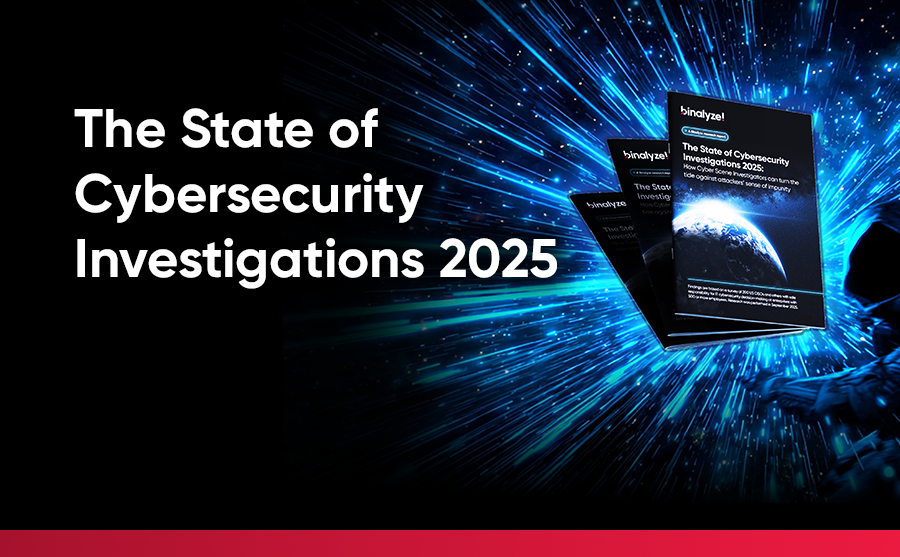
Binalyze’s report, The State of Cybersecurity Investigations 2025: How Cyber Scene Investigators Can Turn the Tide Against Attackers’ Sense of Impunity, surveyed 200 US CISOs. The report exposes major cracks in enterprise crisis management, showing how repeated missteps responding to cyberattacks are worsening both financial and reputational damage. Key findings show:

  • A clarity gap blocking simple answers: At most 50% of CISOs can answer the most basic cyberattack questions, such as: Does the attacker still have access? How did they get in? Was data stolen? And if so, what? Being able to answer these questions with confidence should be every organization’s priority.
  • Repeating mistakes of the past: 65% of CISOs admit their organizations haven’t always learned the right lessons following cyberattacks. In fact, 75% say once a cyberattack has happened, there’s no guarantee that the exact same attack won’t succeed again.
  • The attack aftermath: 70% of organizations say they struggled to remediate or recover from an attack in the past year. Additionally, 61% have been punished by regulators because of a security breach, and 56% denied cyber insurance payouts, due to being unable to demonstrate, through sufficient insight, that the necessary security controls were in place.

“With cyberattacks now inevitable, the real test for organizations is how fast they can respond and recover,” says Lee Sult, Chief Investigator at Binalyze. “The recent Jaguar Land Rover breach, which halted operations for a month and cost an estimated $2.5 billion, highlights the scale of disruption at stake. Rapid cyber response encompassing in-depth Cyber Scene Investigation is essential to identify, isolate, and eliminate threats while keeping regulators and insurers informed. But this relies on visibility, and 75% of CISOs feel they are missing key information every time there is a breach. With clear, actionable insight into IT environments, organizations can locate attackers, contain damage, and regain control before the impact spirals.”

The Need for Speed in Cyber Investigation

Rapid response is critical when cyber breaches or attacks occur. Every minute gives attackers more time to cause damage or hide their tracks, and organizations less time to understand the breach, update stakeholders, and warn the wider community of new threats.

Yet limited visibility across security frameworks continues to hinder effective incident